




Most B2B websites have the same problem. They look polished, they load fast, and they say something like "We help businesses grow with innovative solutions." And then nobody fills out the contact form.
That's not a design problem. That's a strategy problem.
A B2B website strategy is the plan behind your website. It's not about which font you use or how many pages you have. It's about what your website is supposed to do, who it's talking to, and what it needs to say to make the right person take action. Get the strategy wrong, and no amount of beautiful design will save you. Get it right, and your website becomes your best salesperson; working 24/7, qualifying leads before they even talk to your team.
This guide breaks down exactly what a strong B2B website strategy looks like in 2026, why most companies skip the steps that matter most, and what you need to do differently.
What Is a B2B Website Strategy (And Why Most Companies Get It Wrong)?
A B2B website strategy is a documented plan that defines your website's goals, your target audience, your messaging, your content structure, and how all of it connects to revenue. Think of it as the blueprint before the build. Without it, you're essentially guessing, building pages based on what a competitor did or what your team thinks "looks good".
The mistake most companies make is jumping straight to design or development without answering the foundational questions: Who are we talking to? What do they need to believe before they buy? What action do we want them to take? When you skip those questions, you end up with a site that looks like a brochure and performs like one too.
A proper B2B website strategy answers all of those questions upfront, so every page, every headline, and every CTA has a job to do.
Step 1: Know Exactly Who You're Building the Site For
Before you write a single word or design a single page, you need to know who your website is talking to. This means building an Ideal Customer Profile, or ICP. An ICP is a detailed description of the specific type of company and person most likely to buy from you, benefit from your product, and stay a customer long-term.
Notion didn't build their website for "any team that takes notes". They built it for knowledge workers who felt trapped by rigid tools like Confluence. That specificity shows in every headline they write. The same principle applies to you. The more precisely you define your ICP, whether it's a Head of Marketing at a Series A SaaS company or an ops lead at a 50-person logistics startup, the easier it is to write copy that makes them feel seen.
.jpg)
If your site tries to speak to everyone, it ends up connecting with no one.
Step 2: Nail Your Positioning Before You Touch the Design
Positioning is how you define what your company does, who it's for, and why it's different from every other option out there. It's the answer to the question every visitor silently asks within three seconds of landing on your site: "Is this for me?"
Webflow didn't say, "We make website builders." They positioned themselves as the tool for designers who are tired of handing off to developers. Slack didn't pitch "team messaging software" early on. They framed themselves as the thing that kills internal email. Sharp, specific, impossible to ignore.
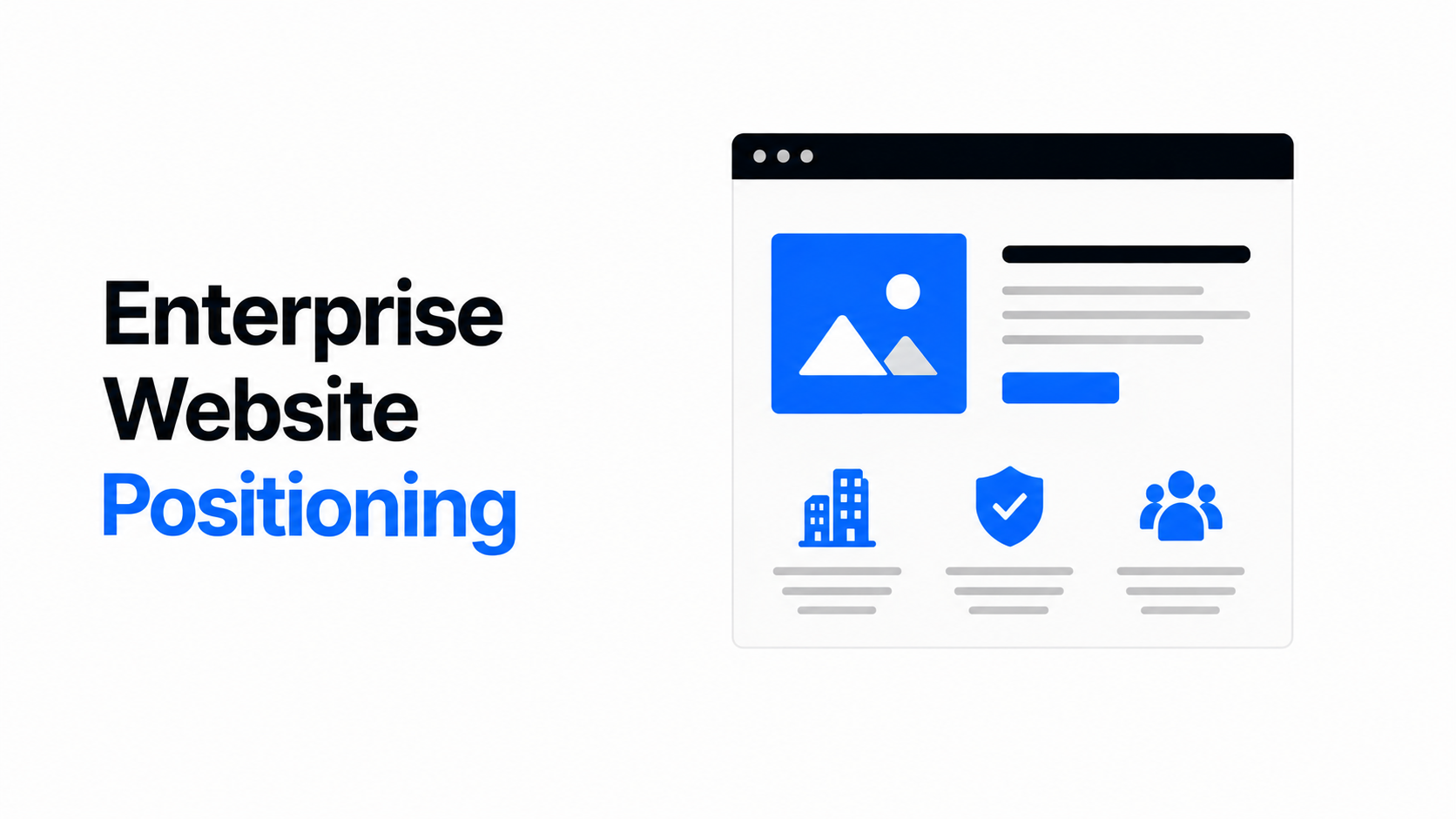
A strong position names who you help, the specific problem you solve, and why you're the right choice over the alternatives. Getting this right is harder than it sounds, and it's the foundation everything else builds on. This is exactly where working with a specialist B2B website agency pays off the most.
Step 3: Structure Your Site Around the Buyer Journey
The buyer journey for a B2B company has three stages. At the top, buyers are becoming aware they have a problem. In the middle, they're comparing options. At the bottom, they're ready to decide. Your website needs to serve all three, but most B2B websites only serve one.
A homepage with a single "Book a Demo" CTA is only talking to people who are already ready to buy. That's maybe 3 to 5% of your traffic. The other 95% leave, and you lose them.
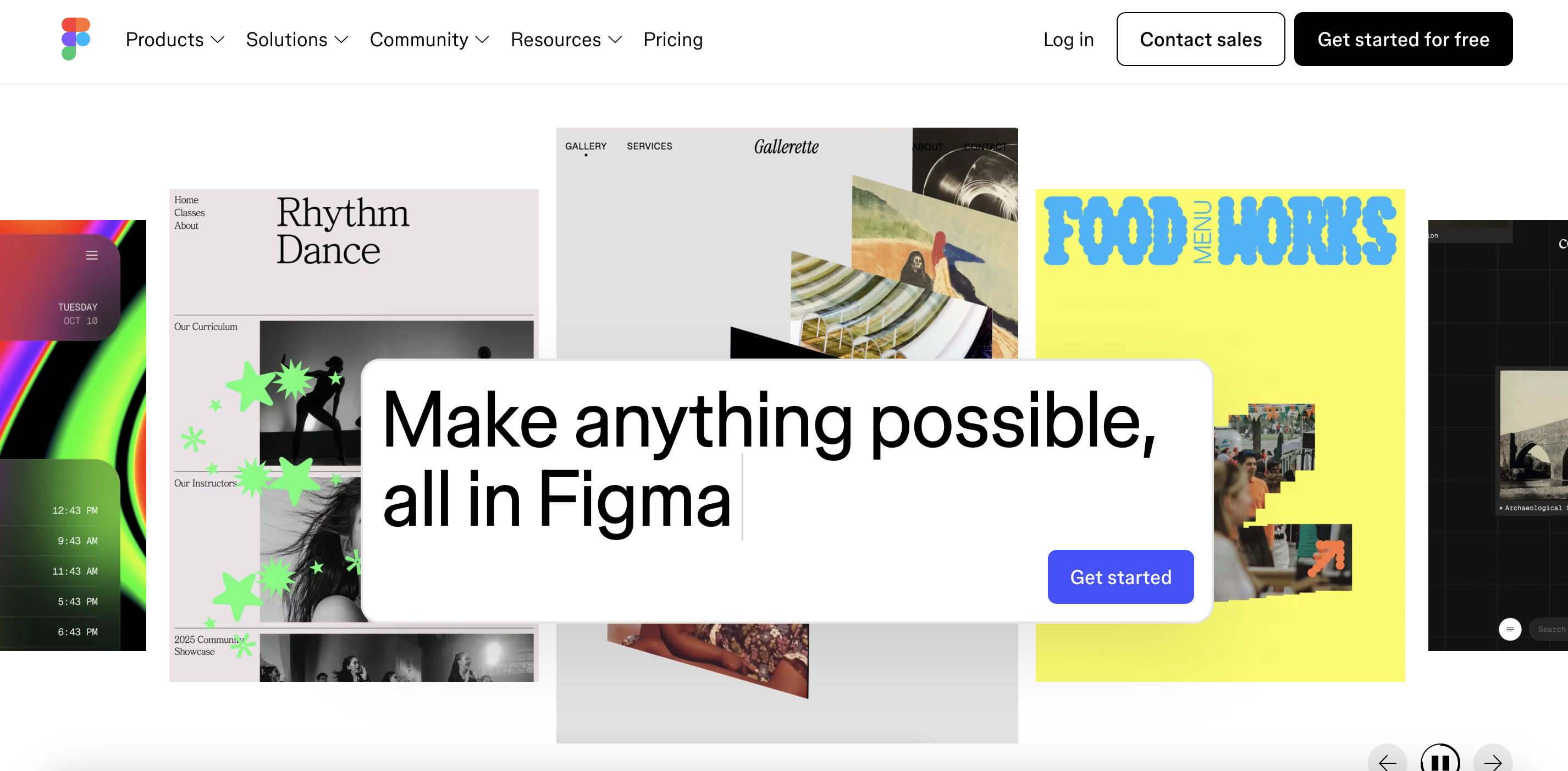
Figma does this well. They have blog content for designers early in their research, comparison pages for buyers evaluating tools, and a frictionless free plan for people ready to try it. Every stage is covered. A smart B2B website strategy does the same: thought leadership for awareness, case studies for evaluation, clear pricing and demos for decision-making.
Step 4: Write Copy That Converts, Not Copy That Impresses
Most B2B website copy is written to impress internal stakeholders, not to convert external buyers. It's full of words like "innovative", "scalable", and "best-in-class" that say nothing and convince nobody.
Effective copy does one thing: makes the reader feel like you understand their problem better than they do. The framework that works is Problem-Agitate-Solve. Name the problem, show you understand the cost of it (lost time, lost revenue, team frustration), then present your solution as the specific answer. Loom's early homepage copy did exactly this: "Video that moves work FORWARD" One line, one problem, one solution.
Your CTAs matter just as much. "Contact Us" is weak. Get a free website audit" or "See how we'd position your product" are specific, low-friction, and tell the visitor exactly what they're getting. Every page needs one clear next step.
.jpg)
Step 5: Build SEO Into the Strategy From the Start
Most B2B companies treat SEO as an afterthought, something they think about after the site is already live. That's expensive. SEO needs to be baked into the architecture from day one.
For B2B, this means ranking for high-intent terms your buyers actually search for: "b2b website strategy", "b2b website agency", and "webflow agency for SaaS". Not generic terms, but specific ones that signal buying intent.
The most effective approach is a content pillar strategy. A content pillar is a comprehensive piece on a core topic (like this post) surrounded by shorter supporting articles that link back to it. This tells Google your site is an authority on that subject. Webflow and Notion both used this exact model to build organic traffic engines that now drive a significant portion of their inbound. The same approach works for B2B service businesses at any stage.
Step 6: Make Sure Your Site Is Optimised for AI Search, Not Just Google
In 2026, your buyers aren't just using Google. They're asking ChatGPT, Perplexity, and Claude questions like "What's the best B2B website agency for SaaS companies?" and reading whatever those AI tools surface.
This is what's called AEO, or Answer Engine Optimisation. AEO is the practice of structuring your content so that AI search engines can extract clear, citable answers from it and recommend your business to people asking relevant questions.
The good news is that AEO and traditional SEO overlap significantly. Both reward clear definitions, structured content, named examples, FAQ sections, and authoritative claims backed by data. If you write a blog post that clearly defines what a B2B website strategy is, walks through it step by step, and cites real examples, both Google and ChatGPT are more likely to surface it.
The companies winning in AI search right now are the ones who write content that directly answers the questions their buyers are asking, without jargon, without filler, and without making the reader work to find the point. That's the standard to write to.
What a Strong B2B Website Strategy Looks Like in Practice
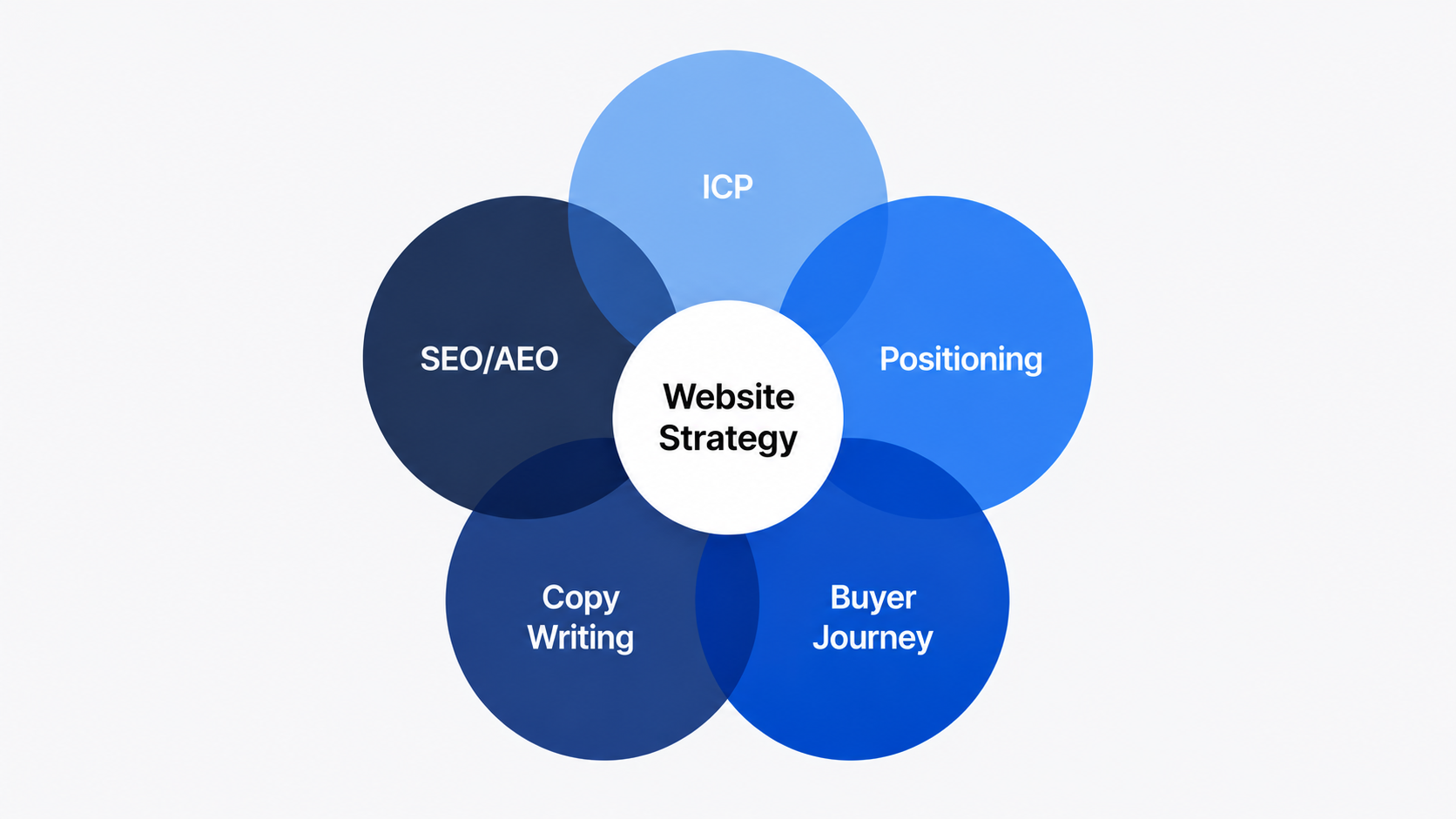
To bring this all together: a strong B2B website strategy starts with a clear ICP, builds on sharp positioning, maps the site structure to the buyer journey, fills that structure with copy that converts, builds SEO into the architecture from day one, and optimizes for how buyers search in 2026.
The result is a website that doesn't just exist, it works. It ranks for the terms your buyers search. It speaks directly to your ICP. It earns trust quickly. And it converts visitors into leads at a meaningfully higher rate than the average B2B site.
According to data from the Demand Gen Report, most B2B buyers engage with several pieces of content before talking to sales. That means your website isn't just your digital business card. It's your entire pre-sales team. Strategy is what makes it function like one.
Your website should be generating a pipeline. Is It?
If you've read this far, you already know the answer to why your website isn't converting: it's a strategy gap, not a design gap. The positioning is unclear. The copy speaks to everyone. The site has no plan for the 95% of visitors who aren't ready to book a demo today.
The good news is that every single one of those problems is fixable.
Start with your ICP. Get your positioning sharp. Structure the site around how your buyers actually make decisions, fill it with copy that earns the click, and build SEO into the foundation before you launch a single page. Do those things well, and your website stops being a digital brochure and starts being your best-performing sales asset.
If you want help building a B2B website strategy that actually drives inbound, Minute Creative does exactly this for SaaS companies. We handle positioning, Webflow design, SEO architecture, and conversion copy, so you get a site that works as hard as the rest of your team. Book a free strategy call and we'll show you what your website could be doing differently.
.jpg)