



If you're searching for a SaaS digital marketing agency, your product is probably gaining traction, but growth has started to slow. Maybe you've tried handling marketing in-house or hired a generalist, and the results weren't what you expected.
Here's the short answer: a SaaS digital marketing agency helps software companies attract the right buyers through SEO, content, paid ads, positioning, and other growth strategies tailored to SaaS. Whether you need one depends on whether marketing has become a bottleneck for your business.
Let's break down what that actually means.
What does a SaaS digital marketing agency actually do?
Here's the honest version, stripped of buzzwords. A SaaS digital marketing agency runs the marketing engine for your software company: the systems and content that bring in new leads and turn interested visitors into demo bookings or free trial sign-ups. That usually includes some combination of:
- SEO and content, meaning writing and optimizing pages so your ideal customers find you on Google (and increasingly, get pointed to you by tools like ChatGPT and Perplexity when they ask a question your content answers well)
- Paid ads, meaning running campaigns on platforms like Google or LinkedIn to get in front of buyers faster than organic content alone can
- Positioning and messaging, meaning making sure the words on your website and in your ads actually explain why someone should pick your product over the ten other tools doing something similar
- Demand generation, a term that just means building repeatable systems that consistently bring in new potential customers, instead of relying on one-off campaigns that work for a month and then go quiet
A generalist marketing agency might know how to do some of this. A SaaS-specific one knows why a software company's buying process looks completely different from, say, an e-commerce brand's. SaaS buyers usually research for weeks, compare tools side by side, and want to try before they buy. That changes everything about how the marketing should be built.

Why does "SaaS" specifically matter here? Isn't marketing just marketing?
Not quite, and this is the part a lot of founders learn the hard way after hiring the wrong kind of help. According to OpenView's SaaS Benchmarks Report, B2B SaaS companies typically see much longer sales cycles and higher customer research effort than most other industries, especially at the mid-market and enterprise level. That means a marketing agency built around fast, emotional, impulse-driven purchases (think consumer products) will often build campaigns that look good but don't actually convert software buyers, who are comparing pricing pages, reading case studies, and asking their team for a second opinion before they commit.
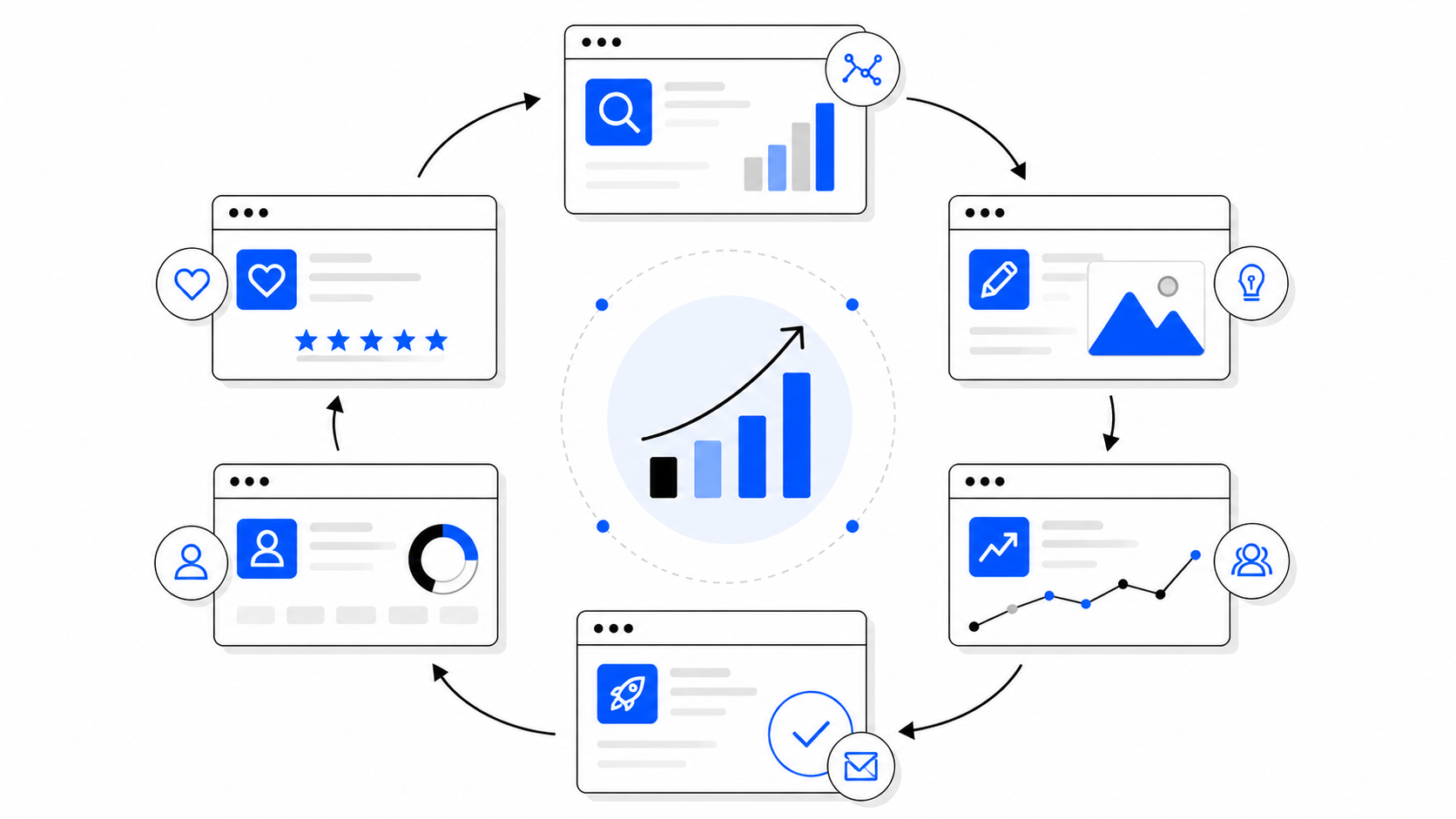
A SaaS-specific agency builds around that reality. Instead of just chasing clicks, they build what's sometimes called a demand generation system, essentially, a repeatable machine of content, SEO, and campaigns that consistently brings in the right kind of leads over months, not just a single spike of traffic that fades a week later.
When should a SaaS founder actually hire a marketing agency instead of doing it themselves?
Here's the honest signal list. If a few of these sound like you, it's probably time.
- You're the one still writing blog posts and running ads yourself, and it's eating up time you should be spending on product or sales.
- You've hired one marketing generalist, and they're stretched too thin to do content, SEO, and paid ads all well at once.
- Your competitors are showing up in Google search results and AI answers, and you aren't.
- You have paying customers and real product-market fit, but growth has flattened.
- You're heading toward a Series A, and investors are asking how repeatable your customer acquisition actually is.
If none of that applies yet, and you're still pre-product-market fit, hold off. Agencies work best once you have a product worth marketing and a customer base worth learning from. Hiring one too early usually just means paying for polished marketing around a message that hasn't been figured out yet.
Agency vs in-house hire vs freelancer: what's actually the right call?
This is usually the real decision founders are trying to make, more than "which agency". Here's how the three options actually compare.
Most SaaS companies between roughly $50K and $500K in monthly recurring revenue land on the agency option because it gives them a full marketing system without the cost and hiring risk of building an internal team from scratch.
What should you actually look for in a SaaS digital marketing agency?
A few things matter more than a slick portfolio page.
Named SaaS clients, not just logos. Ask which specific SaaS companies they've worked with and what actually changed, in numbers, not just "we helped them grow".
A clear methodology, not just services. Agencies that can explain their system in plain language (not just a list of services) tend to actually have a repeatable process behind their results instead of improvising campaign by campaign.
Positioning work before campaign work. If an agency jumps straight into ads and SEO without first understanding how your product should be positioned against competitors like HubSpot, ClickUp, or Hotjar-style tools in your category, the campaigns are being built on shaky ground. Messaging has to come first, or the marketing spend is just amplifying a message that isn't landing yet.
The real problem behind the "SaaS marketing agency" search
Here's what most founders don't say out loud when they start this search: the marketing usually isn't underperforming because nobody's running ads or writing blog posts. It's underperforming because nobody has clearly answered the question, "Why should this exact customer pick us over the other options they're already considering?" Once that's unclear, no amount of SEO or paid spend fixes it; it just spends more money pointing more people at a confusing pitch.
This is the exact gap Minute Creative was built around. Instead of jumping straight into campaigns, we start with sharp SaaS positioning and messaging, using a named framework (Inbound OS) to build a repeatable demand generation system on top of a message that's actually clear. If your marketing spend has been going up without your pipeline growing to match, that's usually the real fix, not another campaign. Talk to us to find out where the disconnect is costing you.

.png)