




You built something genuinely good. Your product works. Your customers are happy. But when a new prospect lands on your website, they leave without booking a demo. The deck goes out. The reply goes quiet. You follow up. Nothing.
The early deals came through warm intros and founder relationships. You could close on vibes alone. But that phase has a ceiling. At some point, your website needs to do what you used to do in person. Your deck needs to make a stranger feel safe enough to hand you their budget.
If none of that is working, you are not just losing deals. You are working twice as hard to win half as many.
That is the exact problem a B2B design agency exists to solve.
What Is a B2B Design Agency?
A B2B design agency is a team that helps companies who sell to other businesses look credible, communicate clearly, and move buyers closer to a decision.
The "other businesses" part matters more than it sounds. When you sell to a business, you are not selling to one person making a quick emotional call. You are selling to a committee. A manager who will use the tool. A VP who will approve the budget. A finance person asking about ROI. An IT lead asking about security. Every one of them has a different question. Every one of them needs to feel confident before they sign off.
A good B2B design agency builds everything, from your homepage to your sales deck to your one-pager, to systematically answer the right questions for the right people at the right moment.
Gartner reports that B2B buyers spend only 17% of their purchase journey meeting with potential suppliers. That means much of the decision-making happens before a sales conversation ever begins. Your website, messaging, and content often shape how buyers evaluate your company long before they reach out.
Why Most B2B Companies Look Worse Than They Are
Here is something that happens more often than it should. A company with a genuinely superior product loses deals to a competitor whose product is objectively weaker. Better team. Better technology. Better support. And still they lose.
Not because the buyer was wrong. Because the weaker competitor looked more credible on paper.
When a buyer cannot fully evaluate two products, they fall back on signals. How does the website feel? Do their materials make me feel like they understand my situation? If your competitor answers those questions faster than you do, they win. Even if your product is better.
This is what makes B2B design different from most investments. It is not a new feature or another sales rep. It is removing the invisible friction costing you deals you should already be winning.
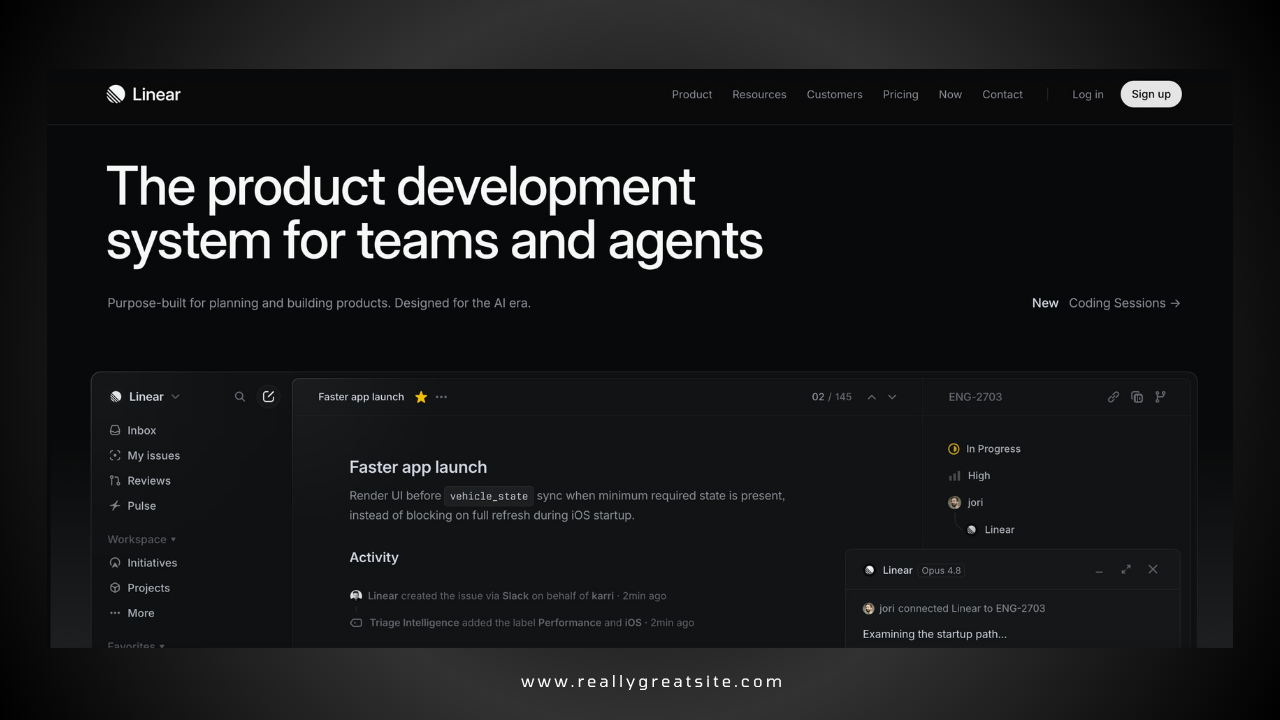
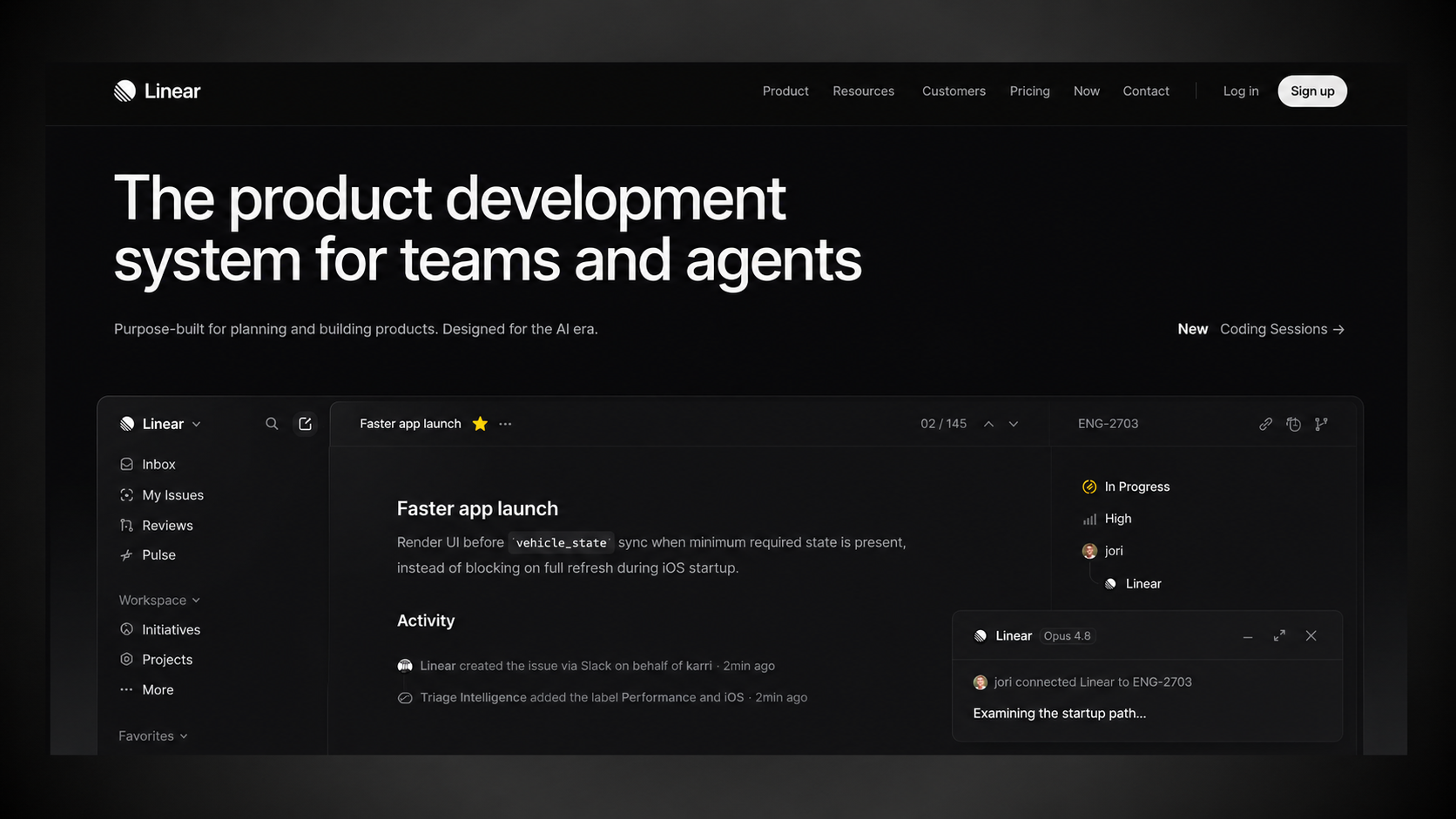
Companies like Linear and Vercel understood this early. Their design made them feel like the obvious choice before a prospect ever sat through a demo. That gap between good product and obvious choice is designed on purpose.

What Does a B2B Design Agency Actually Work On?
When most people hear "design agency", they picture a logo refresh and a new colour palette. For B2B companies, the real work is much deeper.
The biggest piece is your website. Not just how it looks, but how it thinks. The headlines that make a buyer lean in or click away. The proof points that build trust before anyone scrolls down. The call to action that either converts or confuses. A homepage is not a piece of art. It is a sales argument made visual.
Then there is the sales deck. Most B2B decks are structured around what the company wants to say rather than what the buyer needs to hear. A good B2B design agency flips that. The deck opens with the buyer's problem, moves through why existing solutions fall short, introduces the product as the logical answer, and lands on proof that it works. Together they do what a good sales rep does, even when the rep is not in the room.
Case studies are another area where most companies leave value on the table. The typical case study reads like a press release. A well-designed one reads like a story a sceptical buyer can see themselves in. It names the specific pain, shows how the product addressed it, and closes with numbers a CFO can actually take to their next planning meeting.
The Difference Between B2B Design and Consumer Design
Consumer design is optimised for emotion and impulse. The buying journey is short. The stakes of a bad choice are low.B2B design operates in the opposite conditions. The journey is long. The decision involves multiple people. The stakes are high. In that environment, beauty is not enough. What wins is clarity, credibility, and the feeling that the vendor truly understands the buyer's world.
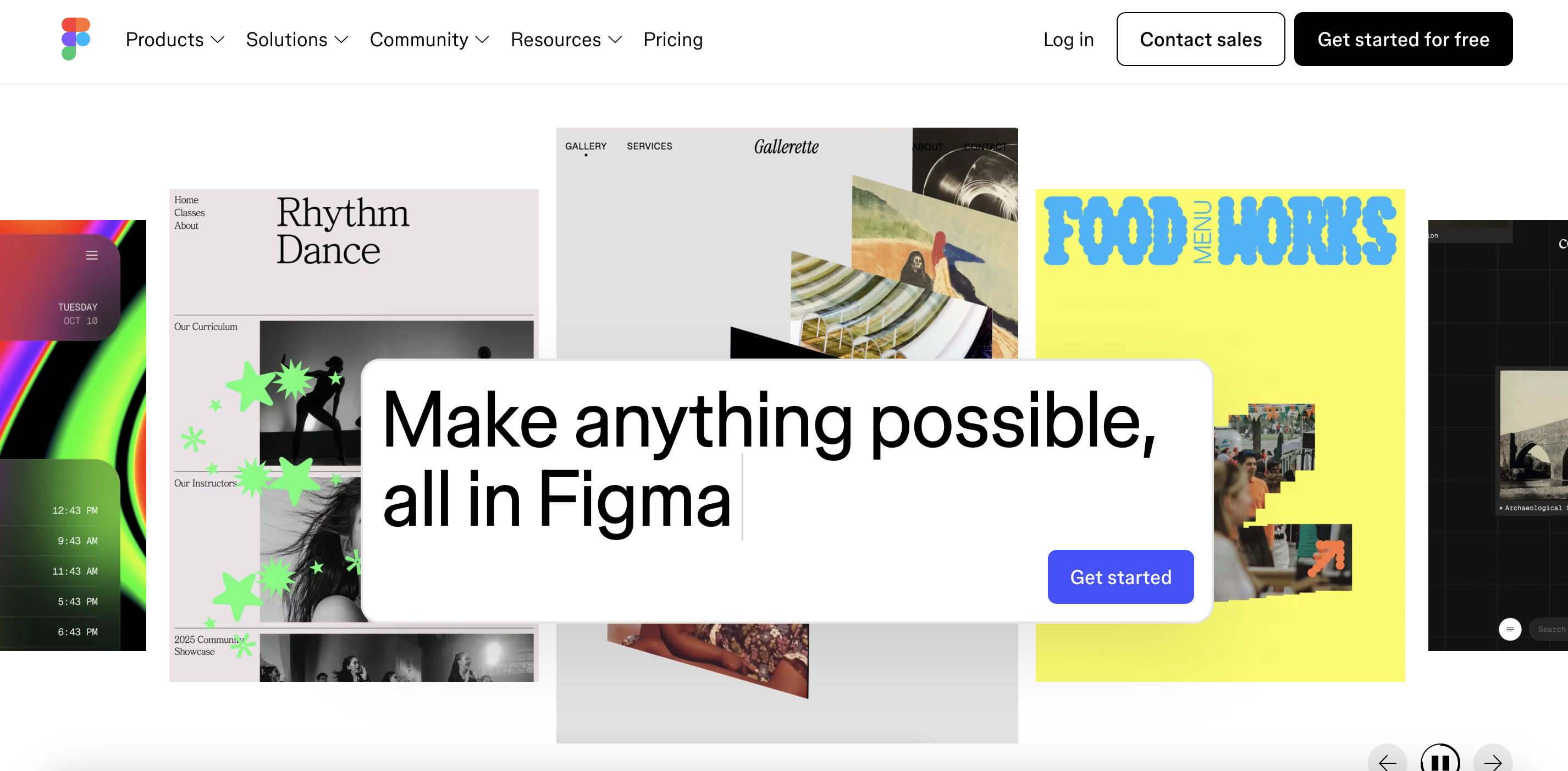
Figma is a useful example of a company that navigates both. Their self-serve product uses a bright, playful aesthetic aimed at individual designers making quick decisions. But when Figma sells its enterprise tier to large organisations, the materials shift entirely: customer case studies, security documentation, ROI framing, and procurement-friendly language. Same company, two completely different design strategies, because the buyer and the buying context are completely different.
.jpg)
When Is the Right Time to Hire a B2B Design Agency?
Most founders hire a design agency when they feel like they "look bad. " That is a reasonable trigger, but usually not the most valuable moment to do it.The companies that get the most out of a B2B design agency are typically at one of three moments.
The first is moving from founder-led sales to a repeatable sales motion. When you personally close every deal, rough materials are fine because you are there to fill the gaps. The moment you hire salespeople who need to close without you, your materials need to work on their own. That is when design becomes a revenue lever, not a cosmetic fix.
The second is moving upmarket. If you started selling to small teams and are now targeting enterprise buyers, your current look may be actively working against you. Enterprise buyers pattern-match quickly. If your materials do not match the tier you are pitching to, you lose credibility before the discovery call even begins.
The third is repositioning. When a company changes its category or needs to differentiate against a competitor, design is the fastest way to signal the shift. A new message delivered through old visual packaging rarely lands. Companies with clearly positioned, well-structured websites convert inbound traffic at significantly higher rates than those with cluttered or vague messaging. The design is not separate from the business outcome. It is a direct input to it.
What to Look for When Choosing a B2B Design Agency
Not all design agencies are the same, and the difference matters more in B2B than in any other context.
A general creative studio will make things look polished and on-brand. That has value. But a B2B specialist brings something different: an understanding of how buying decisions actually get made inside organisations. They know that a homepage is not being read by one person. It is being evaluated by a team, often asynchronously, often with screenshots shared in Slack. They know that a sales deck gets forwarded to three people who were never on the original call. They design for those realities, not just for the first impression.
The first thing to check when evaluating an agency is what questions they ask before they start. If they jump straight into visual exploration, moodboards, or brand direction before they have a clear picture of who the buyer is and what the company is trying to communicate, that is a warning sign. Strategy before aesthetics is not optional in B2B. It is the whole job.
The second thing is their case studies. Not whether the before-and-after looks impressive, but whether they can connect the design work to a business outcome. Any agency can show you a cleaner homepage. The ones worth hiring can tell you what changed in the business after the work shipped.
How Minute Creative Approaches This
Most design projects fall short not because the execution was weak but because the work started in the wrong place. The result is a beautiful website that still does not convert and a polished deck that still does not close.
At Minute Creative, messaging comes before design. Every deliverable is built around one question: does this make the right buyer trust us enough to move forward?
If that sounds like the kind of work you are looking for, let’s talk.
.jpg)