.png)


Your SaaS product might be great — but if your positioning is weak, you’ll struggle to grow.
If your startup is attracting unqualified leads, facing long sales cycles, or competing on price instead of value, it’s NOT a marketing problem — it’s a positioning problem.
Most SaaS founders believe more marketing = more growth.
❌ Wrong.
💡 Better positioning = More conversions, lower CAC, and faster scaling.
In this blog, you’ll learn:
✔️ What SaaS positioning is and why it matters.
✔️ The 3 most common positioning mistakes SaaS founders make.
✔️ How strong positioning lowers CAC & shortens sales cycles.
What is SaaS Positioning?
Positioning = How your ideal customers perceive your product in the market.
It answers three key questions:
✅ Who is your SaaS for? (Your ICP – Ideal Customer Profile)
✅ How is it different from competitors? (Your Core Differentiation)
✅ Why should customers care? (Your Unique Value Proposition)
A well-positioned SaaS product:
✔️ Wins deals faster because prospects understand the value immediately.
✔️ Competes on value, not price, so you don’t have to discount to close deals.
✔️ Creates demand instead of chasing leads → Prospects come to you.
Example: Slack didn’t position itself as a “team chat app.” It positioned itself as “the future of work”—differentiating from email and driving adoption.

Why Positioning is the Key to SaaS Growth
Bad Positioning → Low Conversions & Wasted Ad Spend.
If your positioning is weak, your SaaS product won’t attract the right customers.
Signs Your SaaS Positioning is Broken:
❌ Your website gets traffic, but no conversions.
❌ Sales calls take too long because prospects don’t see instant value.
❌ You’re competing on price instead of differentiation.
❌ Customers sign up, but churn quickly → They don’t feel the product solves their problem.
Example: Intercom wasn’t just another live chat tool. It positioned itself as “the best way to connect with customers” — making it instantly valuable.
Takeaway: Great positioning makes sales easier.
3 Common SaaS Positioning Mistakes
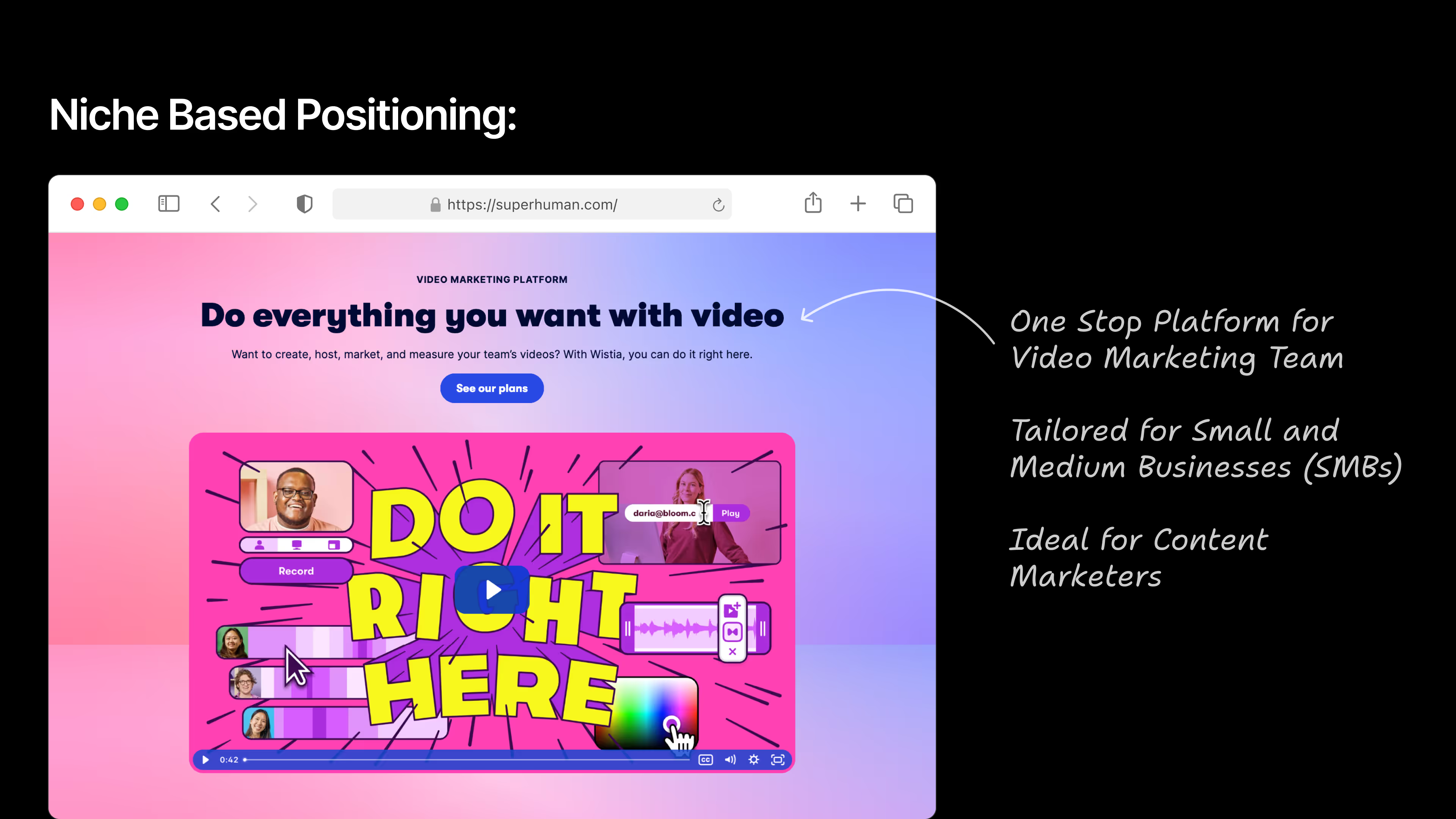
1. Trying to Serve Everyone (Too Broad)
If your SaaS is positioned for “startups, enterprises, and agencies”, you’re positioned for no one.
Fix It: Narrow your Ideal Customer Profile (ICP).
Example: "The only CRM designed for B2B SaaS startups scaling from $50K to $500K MRR."
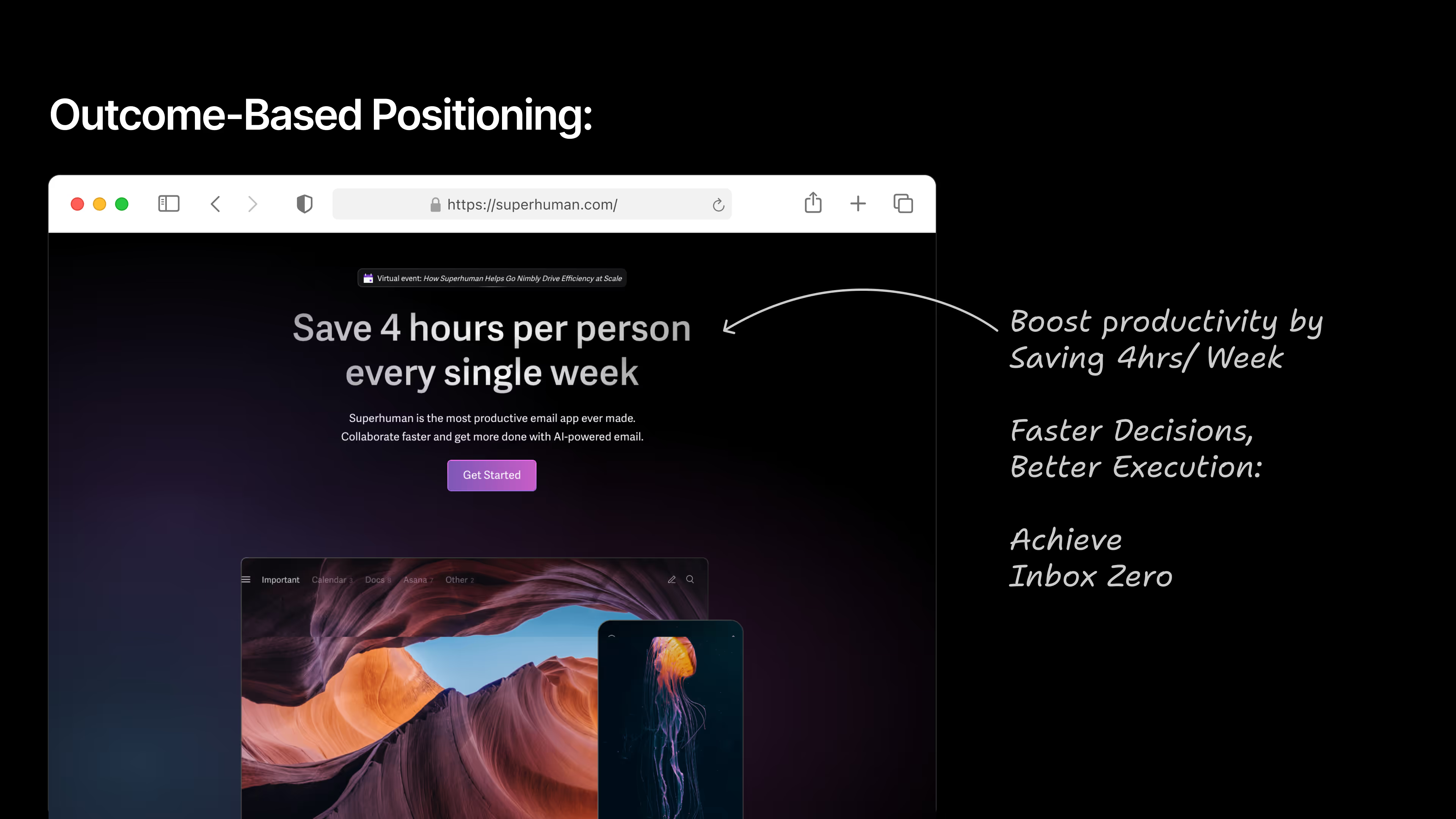
2. Focusing on Features Instead of Outcomes
Nobody cares about your features — they care about how your SaaS makes them more money, saves time, or reduces pain.
❌ Weak Positioning: "Our tool has AI-powered analytics and automated workflows."
✅ Strong Positioning: "Double your demo conversions in 30 days with automated sales workflows."
Fix It: Focus on benefits, outcomes, and transformation.
3. No Clear Differentiation (You Blend In)
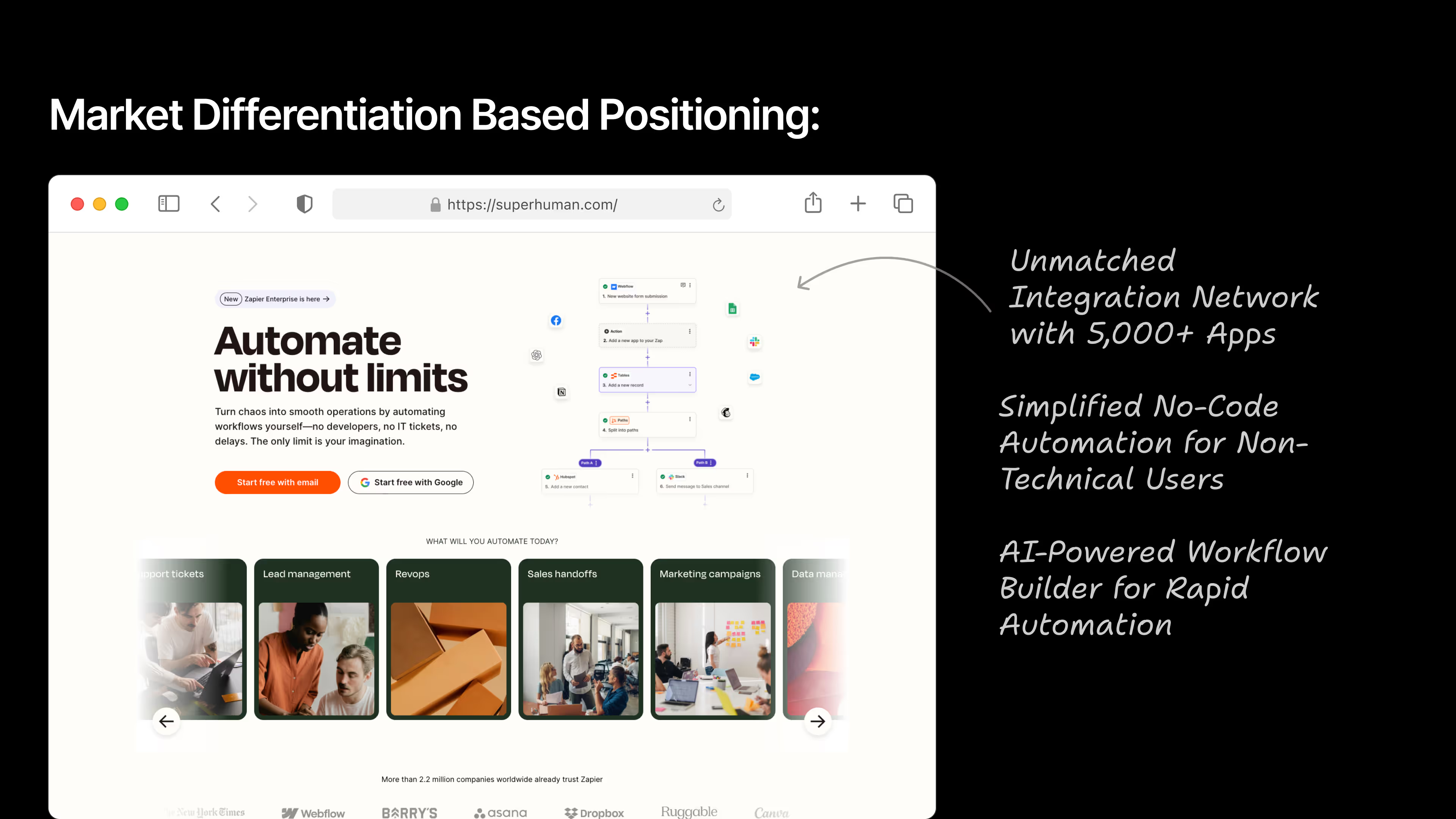
If your positioning sounds like every other SaaS in your space, customers will struggle to see why they should choose you.
❌ Bad Positioning: "An AI-powered CRM for fast-growing companies."
✅ Great Positioning: "The only AI CRM designed for outbound B2B SaaS sales teams."
Fix It: Make your value proposition unique & easy to understand.
How Great Positioning Lowers CAC & Shortens Sales Cycles
Better Positioning = More Conversions = Lower CAC
A strong SaaS positioning strategy will:
✔️ Attract the right customers → Fewer unqualified leads.
✔️ Shorten sales cycles → Buyers understand value instantly.
✔️ Reduce CAC → Less wasted ad spend, higher conversions.
Example: A SaaS company repositioned itself from “a generic workflow tool” to “the only project automation software for agencies” → 2X more demo bookings.
Key Takeaway: Positioning is a growth multiplier — fix it, and scaling becomes easier
What’s Next? Defining Your SaaS ICP (Ideal Customer Profile)
Now that you understand positioning, the next step is to define your Ideal Customer Profile (ICP).
👉 Continue reading: The Step-by-Step Guide to Creating a SaaS ICP