




You sent out a project brief to four designers. One quoted $4,500. Another said $31,000. A third asked for a discovery call before saying any number. The fourth went quiet after two days.
All four are "UI/UX designers". None of them quoted you wrong. That is the actual problem.
UI/UX design costs in 2026 range from $5,000 to $150,000+ per project, depending on who you hire, what they include, and how clearly you have scoped the work. Hourly rates go from $25 for an offshore junior designer to $350 for a senior US boutique studio. The gap is wide and, for most founders, confusing.
This guide breaks it all down with real numbers so you know what to budget, what questions to ask, and how to avoid paying three times for the same work.
What Is UI/UX Design, and Why Does It Cost What It Does?
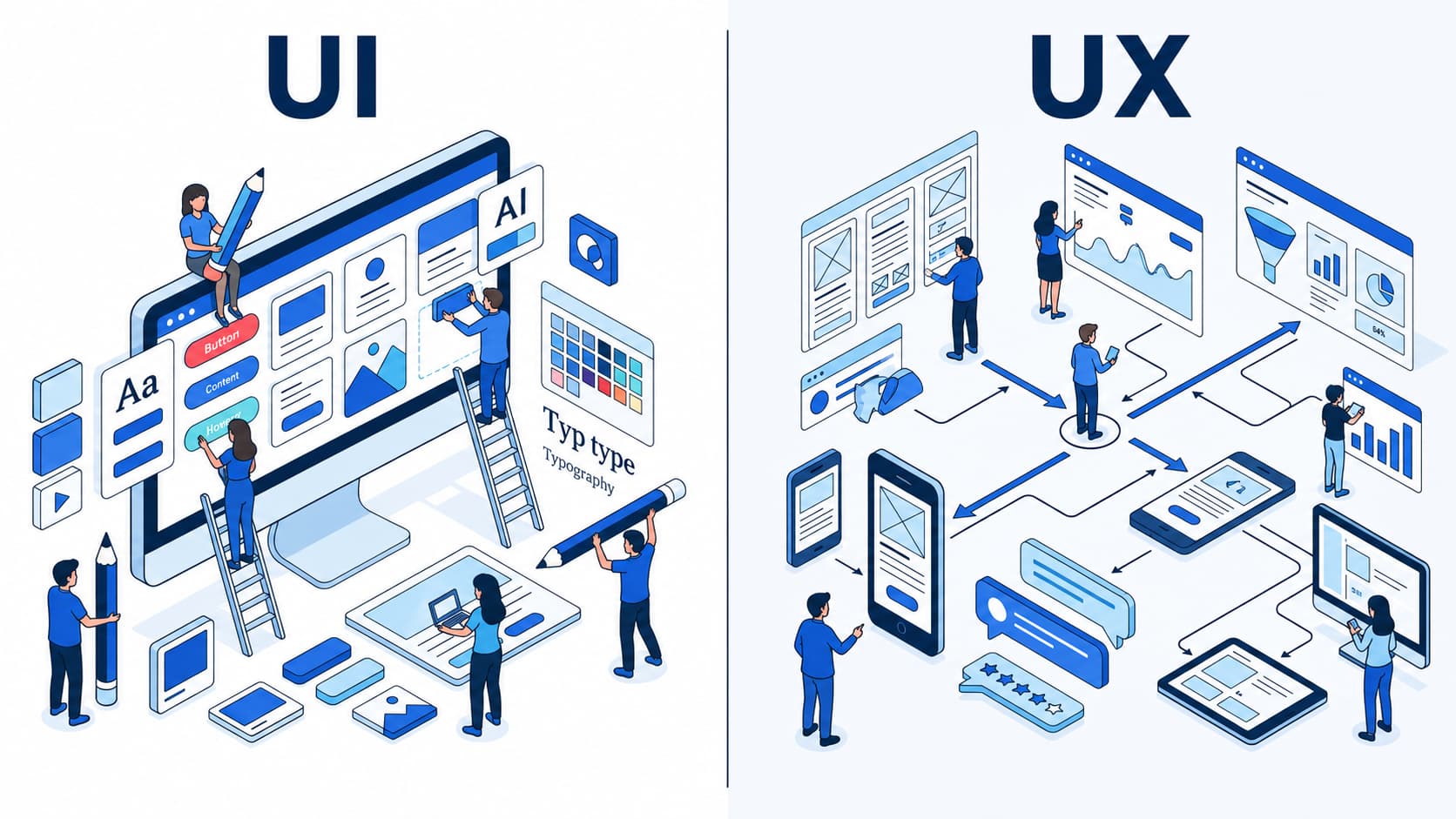
Before we get into numbers, it helps to understand what you are actually paying for, because UI and UX are two different things that agencies often bundle together.
UI design, or user interface design, is the visual layer. Think layouts, colours, fonts, buttons, and icons. It is what your users see. Because it is mostly execution work, it is generally the cheaper of the two.
UX design, or user experience design, is how your product works. Navigation, user flows, and onboarding, the path someone takes to get from sign-up to their first "aha moment". This requires research, testing, and iteration. It takes more time and therefore costs more.
When an agency quotes you for "UI/UX design", they are combining both. When a freelancer quotes you, they might only mean one of the two. That is where the $4,500 vs $31,000 gap comes from. Always ask, 'What exactly is included?'
What Are the Actual Hourly Rates in 2026?
An hourly rate is the cleanest way to compare designers before you agree on a project scope.
Here is what the market looks like right now, based on data from Clutch, Upwork, and Toptal as of early 2026:
If you are hiring from India specifically, the numbers look different in rupees. Indian freelancers charge between INR 1,000 and INR 3,000 per hour. Indian agencies typically charge between INR 5,000 and INR 20,000 per hour depending on their seniority and the complexity of your project.
How Much Does a Full Project Cost?
Hourly rates matter less than total project cost. Here is what real projects cost in 2026, broken down by what you are building:
A simple landing page or small website: Cost: $2,500 to $8,000 (USD) / INR 40,000 to INR 300,000
This is typically 5 to 10 screens, no user research, and a visual design pass only. A senior freelancer can handle this in two to three weeks.
A mobile app MVP (15 to 25 screens): Cost: $15,000 to $40,000 (USD) / INR 500,000 to INR 1,800,000
This is where most startups sit. It includes wireframes, a visual design for all screens, a clickable prototype, and two rounds of revisions. At an offshore agency, you might get this done for $12,000 to $20,000. At a US mid-tier agency, expect $30,000 to $50,000 for the same scope.
A SaaS product or dashboard: Cost: $20,000 to $80,000 (USD) / INR 800,000 to INR 3,000,000
SaaS products have complex flows: user roles, data-heavy dashboards, multi-step onboarding, and settings panels. The more screens, the more your cost grows. Indian agencies working on SaaS typically charge INR 300,000 to INR 3,000,000 depending on scope and research depth.
An enterprise platform redesign: Cost: $50,000 to $200,000+ (USD) / INR 3,500,000 to INR 10,000,000+
These projects involve UX research, stakeholder interviews, usability testing, design systems, and multiple rounds of review. You are not just paying for screens. You are paying for the process.
Freelancer vs Agency: Which One Should You Hire?
This is the question every founder asks, and the honest answer is it depends on your project size and how much internal capacity you have.
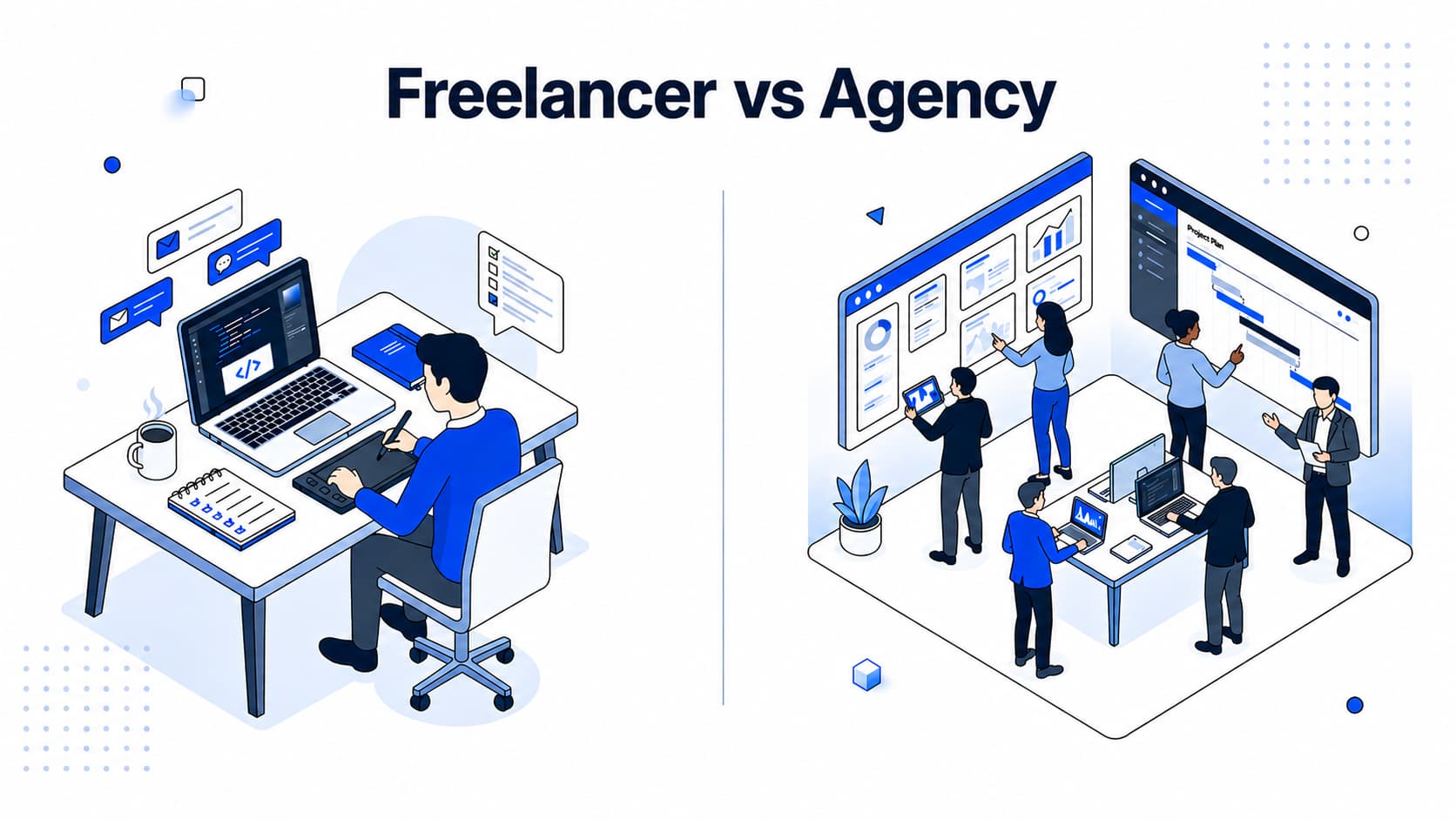
Freelancers are cheaper per hour, almost always. A solid mid-level freelancer from Upwork costs $50 to $100/hour. An equivalent designer at a mid-tier agency would cost $150 to $250/hour. For a project under $20,000, a freelancer often wins on total cost.
But cheaper per hour does not mean cheaper overall. When you hire a freelancer, you are also the project manager. You write the brief, you chase deadlines, you coordinate feedback, and you handle scope changes. If you are a founder with no design background, that is a real cost.
Agencies handle all of that internally. They bring a team: a UX researcher, a visual designer, a prototyper, and someone managing communication. For projects above $25,000 or anything with moving parts, the accountability of a boutique agency often delivers better value than a cheaper-per-hour solo hire.
A good rule: if your project is simple and well-scoped, hire a freelancer. If it is complex or if you have never done this before, hire an agency.
Pricing Models: How Designers Actually Charge
Most designers use one of three pricing models, and knowing the difference saves you from surprises.
Hourly billing is common for freelancers and for agencies on smaller tasks. You pay for time spent. It is flexible if your scope is not fully clear, but it is also easy for costs to run over if the project is not tightly managed.
Fixed-project pricing is what most agencies use for defined work. You agree on a scope, they give you a number, and you pay that number in milestones. It is predictable and good for founders who want to know exactly what they are spending. The risk is that scope creep, adding new screens or changing direction mid-project, often triggers extra charges.
Retainer pricing is for ongoing work. You pay a monthly fee, usually $3,000 to $12,000 per month in the US or INR 150,000 to INR 500,000 per month in India, and you get a set number of hours or deliverables each month. This works well for SaaS companies that are continuously shipping new features and need consistent design support.
What Makes the Price Go Up?
Knowing the base rates is useful. Knowing what pushes costs higher is more useful.
Here are the five things that most reliably increase your final bill:
1. Number of screens. Every screen is design time. A 15-screen app costs roughly half of a 30-screen app, all else equal. Per-screen pricing in 2026 runs about $150 to $300 for a standard screen and $500 to $1,500 for a complex dashboard screen with multiple states.
2. UX research. If you want user interviews, usability testing, or heatmap analysis baked in, budget extra. A standalone UX audit runs $3,500 to $10,000. Full research before a product redesign adds $5,000 to $20,000 to any project.
3. Revisions. Most project quotes include two revision rounds. Every round after that costs more. Teams that skip the discovery phase often find themselves in round four or five, and the final invoice looks nothing like the original quote.
4. Design systems. A design system is basically a shared rulebook for how your product should look and behave, a library of reusable components so every button, card, and form element stays consistent. Tools like Figma make this faster, but it still takes time. Building a proper design system adds 20% to 40% to any project cost.
5. Geographic location of the agency. A New York agency charges $120 to $300/hour. An Indian agency charges $25 to $80/hour for comparable senior work. Remote work has made this gap smaller than it used to be, but it still exists, and it is a legitimate way to control budget.
In-House vs Agency: The Calculation Founders Miss
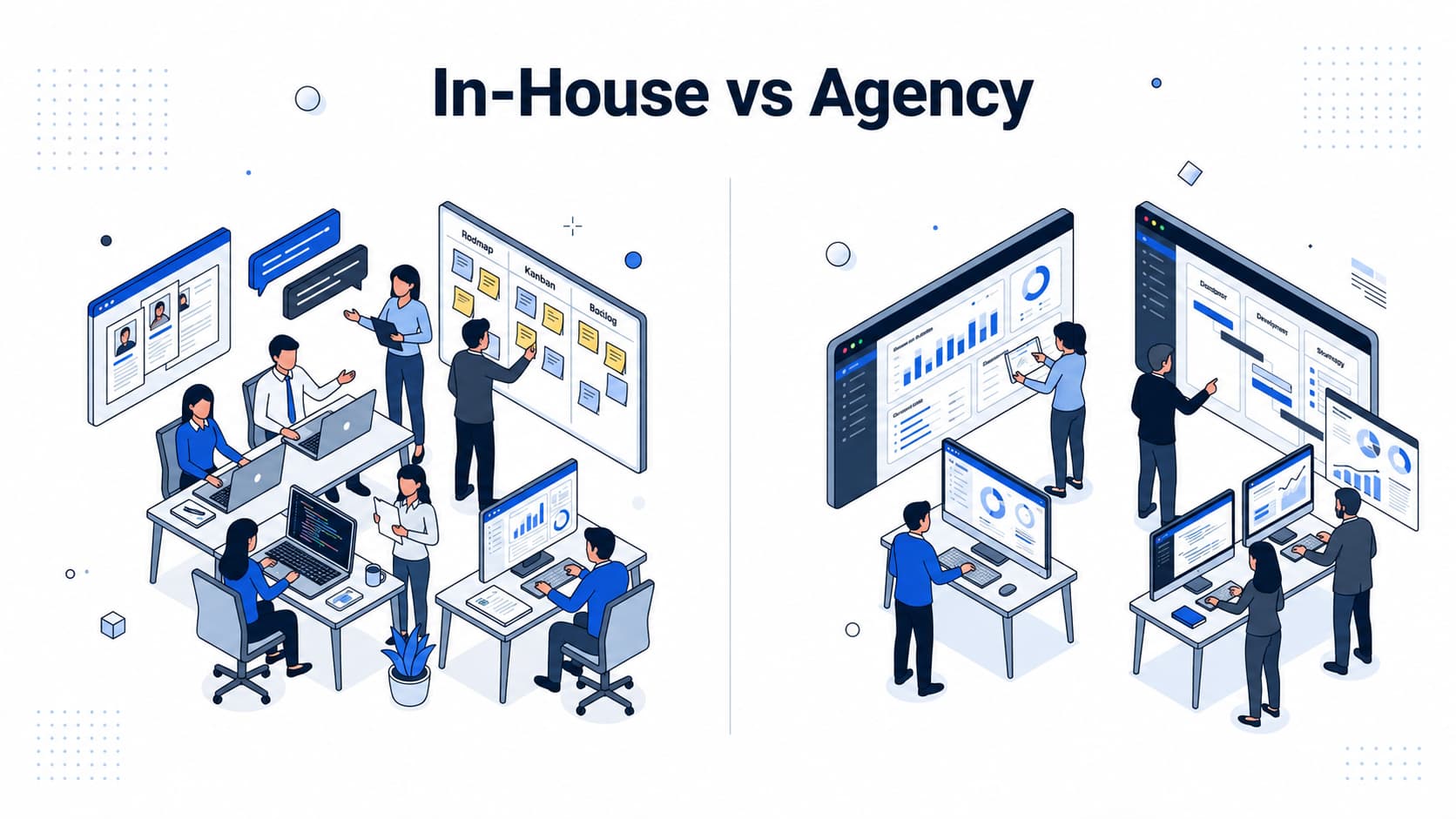
Some founders think hiring a full-time designer in-house is cheaper than working with an agency. The math rarely works out that way, especially early on.
A mid-level designer in India costs INR 120,000 to INR 500,000 per month in salary. That is INR 18,00,000 to INR 36,00,000 per year before you add in benefits, tools, and the time you spend managing them. For an early-stage product, working with an agency for INR 300,000 to INR 800,000 for a defined project often gives you better output for the money.
In-house makes sense once you have enough continuous design work to keep someone fully occupied. Until then, project-based agency work is the smarter allocation.
How Much Should a Startup Actually Budget?
A useful benchmark: allocate 15% to 25% of your total product development budget to design.
If your development budget is $100,000, plan for $15,000 to $25,000 in design. For an Indian startup with a development budget of INR 2,000,000, that means INR 300,000 to INR 500,000 for design.
For a first product with 15 to 25 screens, plan for $15,000 to $35,000 (USD) or INR 500,000 to INR 1,500,000. That range gets you a solid MVP design with wireframes, visual UI, a prototype, and two rounds of revisions from a competent team.
If someone quotes you significantly below that range, ask specifically what is not included. Low quotes usually exclude UX research or design systems or simply count fewer screens than you think you need.
What Does Good Design Actually Return?
Cost without context is not very useful. Here is the context.
Baymard Institute research shows that many e-commerce sites leave significant conversion gains on the table due to checkout usability issues, while Forrester has reported that every $1 invested in UX can generate returns of up to $100, depending on the product and business context.
For SaaS specifically, where churn is the main killer, better onboarding design directly reduces the number of users who sign up and never come back. If your current onboarding loses 60% of users in the first week and good UX reduces that to 30%, the design paid for itself in the first month of improved retention.
A $25,000 redesign that confuses users is more expensive than a $60,000 engagement that improves how people use your product. The question is never just What does this cost?. It is what does poor design cost.
How Minute Creative Approaches This
Many founders struggle with design budgets because they do not know what level of UI/UX investment their product actually needs. A low quote may exclude critical research and strategy, while an expensive quote may include services you do not need. Without clear guidance, companies often end up paying twice for the same work.
At Minute Creative, we start with your business goals, product, and users before recommending solutions. This helps ensure you invest in the right level of design from the start. Whether it is a landing page, SaaS dashboard, MVP, or redesign, the focus stays on outcomes.
The goal is simple: create design that improves adoption, conversions, and long-term growth.
.jpg)