.png)

.jpg)




If you're searching for the best Webflow alternatives, chances are your website no longer fits the way your SaaS company works today.
Maybe your marketing team wants more flexibility, your developers are tired of platform limitations, or you're simply wondering if there's a better option as your company grows.
Here's the short answer: There isn't one "best" Webflow alternative. The right choice depends on your stage. Early-stage startups often do well with Webflow or Framer. Fast-growing SaaS companies usually move to custom builds with Next.js for greater flexibility and performance. Some teams even choose WordPress for simple marketing sites.
Let's look at each option and where it makes the most sense.
What is Webflow, exactly, and why do SaaS companies use it in the first place?
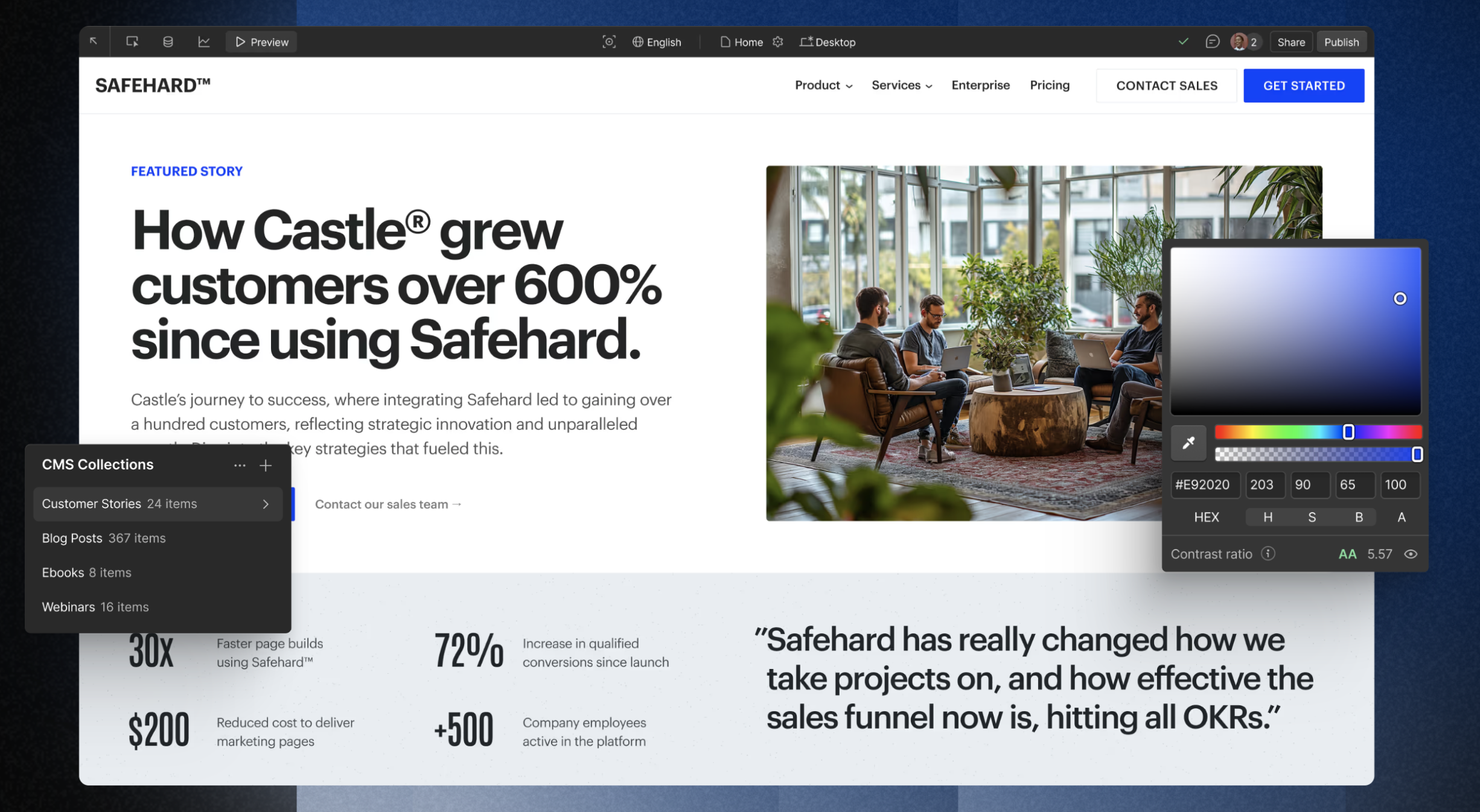
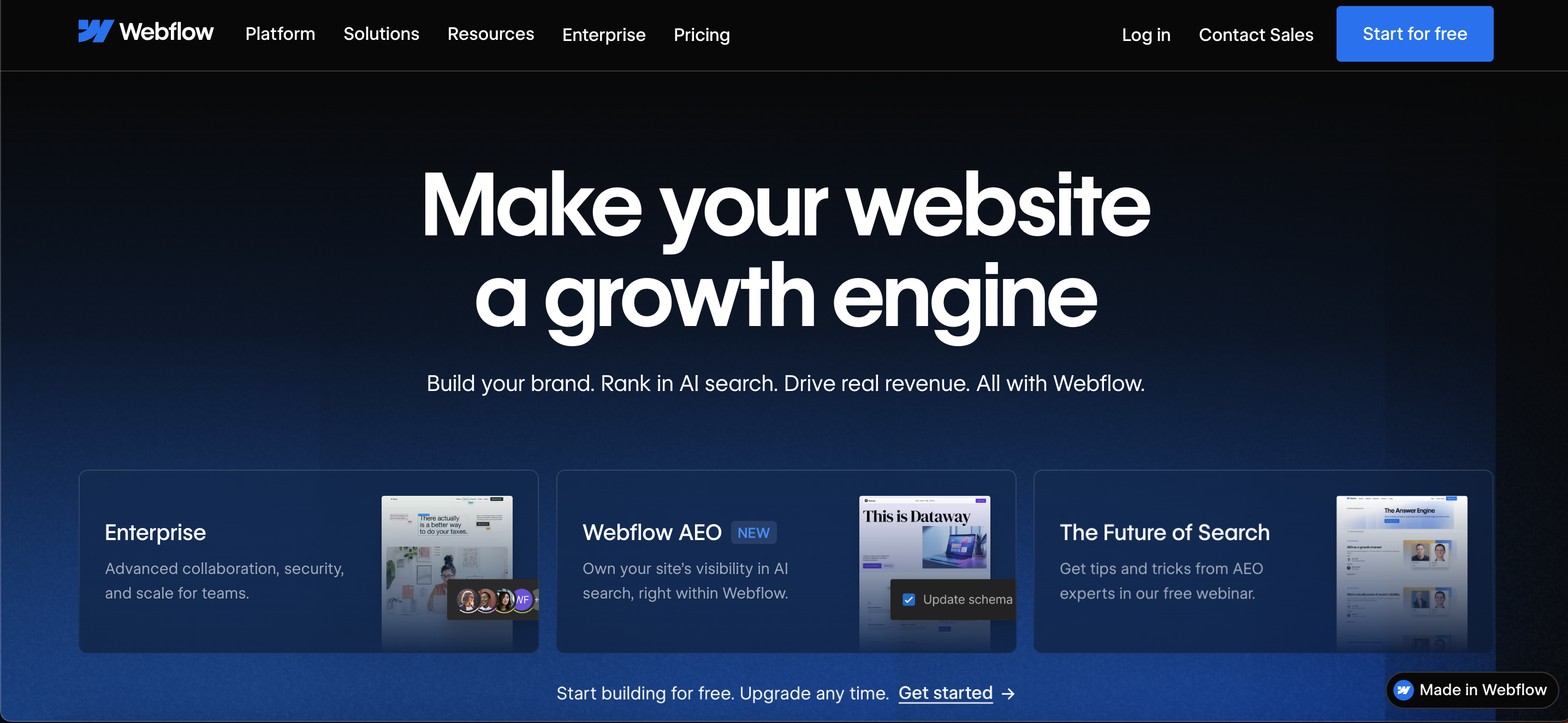
If you're new to this world, here's the simple version. Webflow is a website builder that lets you design a website visually, dragging boxes and text around, without writing code. It's what people call a "no-code" tool, meaning you don't need a developer to build or update the site. For a SaaS startup trying to get a website up fast without hiring an engineer just to fix a typo on the homepage, that sounds like a dream.
And for a while, it is a dream. Most SaaS companies start on Webflow (or something similar) because speed matters more than perfection when you're pre-revenue or just past it. According to OpenView's SaaS benchmarks, early-stage B2B SaaS companies spend a huge chunk of their limited budget on product, not marketing infrastructure, so a low-cost, fast website tool makes sense at the start.
The problem shows up later. As the company grows, the website needs to do more: handle more pages, load faster, integrate with more tools, support a bigger content team, and rank better on Google. That's usually the exact moment a founder starts Googling alternatives.
When should a SaaS founder actually consider switching away from Webflow?
Here's the honest signal list. If two or more of these sound like you, it's worth exploring alternatives.
- Your page load speed is dragging, and it's hurting your SEO rankings.
- Your dev team keeps saying the CMS (the system that stores and organises your website content) is limiting them.
- You're paying more in Webflow CMS item limits and hosting add-ons than you expected.
- Your design and marketing team want more flexibility than Webflow's built-in components allow.
- You're scaling past a seed round toward Series A, and your website now needs to support a real content engine: blog, case studies, comparison pages, and more.
If none of that sounds familiar yet, honestly, don't switch. Webflow is still one of the best tools out there for a growing SaaS site, especially for marketing teams who need to move without waiting on engineering. But if you're nodding along to a few of those points, let's look at your real options.
Framer: the closest thing to Webflow, but built for speed and simplicity
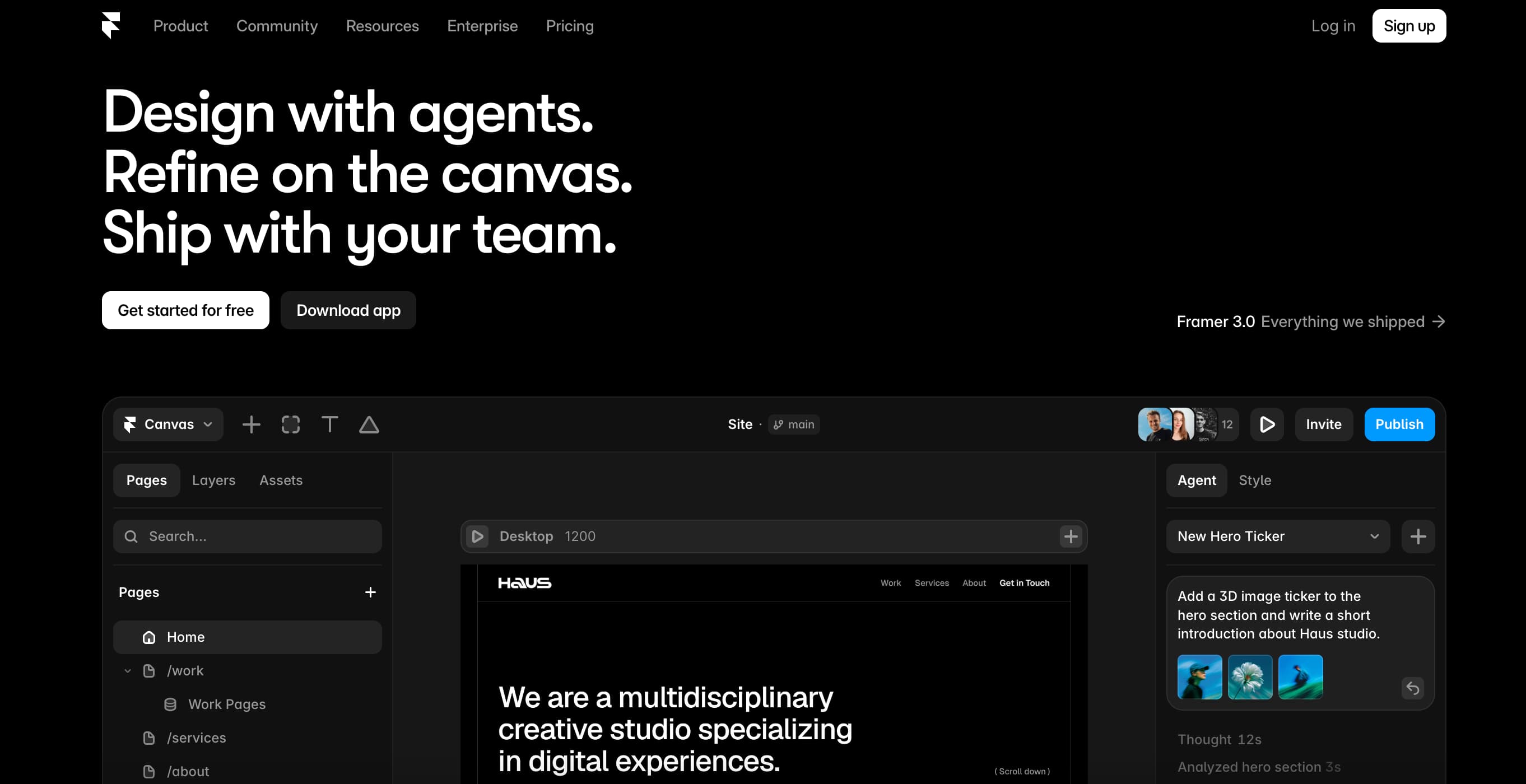
Framer has become the go-to comparison whenever someone searches for Webflow alternatives, and for good reason. It's also a visual, no-code website builder, but it leans harder into speed and modern design defaults. If your team liked the "drag and design" feel of Webflow but wants something that feels a bit more modern and lighter to load, Framer is usually the first stop.
The tradeoff: Framer's CMS and enterprise features are still catching up to Webflow's maturity, so if you need heavy content operations (think hundreds of blog posts, complex filtering, and multiple content types), you might hit limits sooner than you'd like.
Custom code (Next.js, Vercel, and similar setups): the choice once you have real engineering resources
This is where most funded, fast-growing SaaS companies eventually land. Instead of a no-code builder, your team builds the website using actual code, usually a framework called Next.js, hosted on a platform like Vercel. Yes, this means you need developers involved. That's the tradeoff.
What you get in return is real control. Page speed goes up significantly because custom code isn't carrying the extra weight that visual builders add behind the scenes. SEO performance tends to improve too, since your engineering team can fine-tune exactly how the site is structured for search engines. Plenty of well-known US SaaS companies, including Linear and Vercel itself, run fully custom marketing sites for exactly this reason: once you're past early-stage, the website becomes a growth engine, not just a brochure, and growth engines need to be built, not just designed.
The catch is obvious: you need developer time, and developer time is expensive and often busy building the actual product. This is usually why founders look for a middle ground, which brings us to the next option.
Webflow development subscriptions: keeping Webflow, but handing off the busywork
Here's an option a lot of founders don't realise exists until later: you don't always have to leave Webflow to fix your Webflow problems. Sometimes the real issue isn't the tool; it's that nobody on your team has the time or design skill to keep improving it. This is where a Webflow development subscription comes in, where an outside team handles your Webflow builds, updates, and CMS structure on an ongoing basis, priced monthly instead of as one big expensive project.
This tends to be the sweet spot for SaaS companies between $50K and $500K in monthly recurring revenue (a stage a lot of B2B SaaS founders will recognise), because you get expert-level Webflow execution without hiring a full in-house team or committing to a full custom-code rebuild before you're ready for one.
WordPress: still around, still underrated for content-heavy SaaS blogs
It might surprise you, but WordPress hasn't gone anywhere. If your SaaS company's biggest website need is publishing a large volume of blog content (which matters a lot for SEO and, increasingly, for getting cited by AI search tools like ChatGPT and Perplexity), WordPress's content tools are still some of the most mature on the market. The tradeoff is design flexibility. WordPress sites often look more "templated" unless you invest real design and development effort into them.
Squarespace: fine for very early-stage or solo-founder sites, not built for SaaS growth
Squarespace is easy, cheap, and looks decent out of the box. It's a reasonable stopgap if you're pre-product or testing an idea. But it wasn't built with B2B SaaS growth in mind, and most founders outgrow it fast once they start needing custom integrations, gated content, or serious SEO structure.
So what should you actually pick?
If you're early and just need a clean site fast, stay on Webflow or try Framer. If you're funded, scaling hard, and your engineering team has bandwidth, custom code on something like Next.js is the long-term power move. And if you like Webflow but you're tired of it eating your team's time, a Webflow development subscription is usually the quickest fix, since you keep the platform; you just stop being the one stuck building in it.
The real problem behind the "Webflow alternative" search
Here's the thing most founders don't say out loud when they start this search: the website usually isn't slow or ugly because of the platform. It's slow to update because there's no dedicated team behind it, and it doesn't convert because the messaging on it was written once, in a rush, back when the product looked completely different than it does today. Switching from Webflow to Framer, or from Framer to custom code, doesn't fix a website that's saying the wrong thing to the wrong audience; it just changes the tool saying it.
This is exactly the gap Minute Creative was built to close. We treat your website as an ongoing growth subscription, not a one-time build, with sharp positioning paired with expert Webflow development so your site improves every month instead of going stale. Book a call today to get started.